Ask the Expert: Why meter data matters
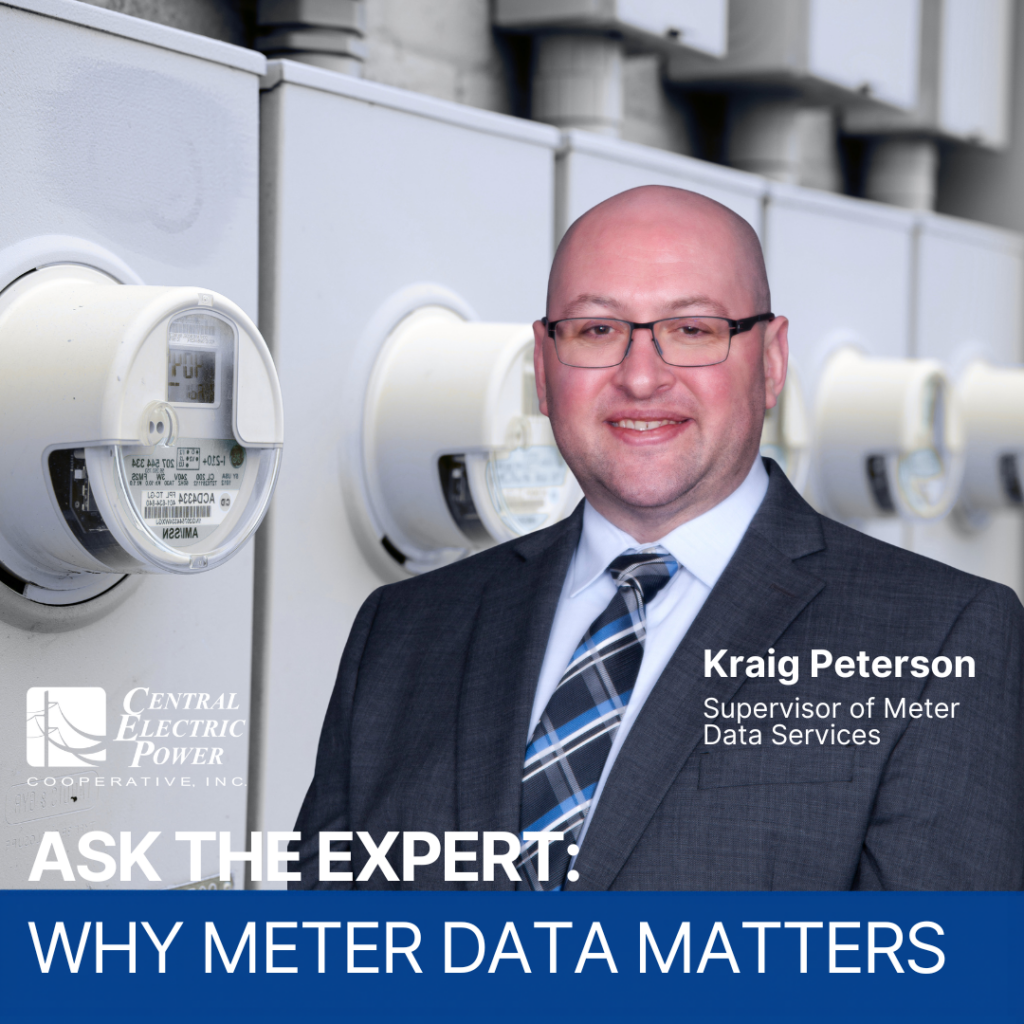
Meter data may not always be visible to the people who flip the switch, but it plays a critical role in how electricity is delivered, managed and billed across South Carolina. Kraig Peterson, supervisor of Meter Data Services at Central Electric Power Cooperative, shares insight into what meter data is, why it matters and how it supports Central’s work as a generation and transmission cooperative.
Background and basics
For those who may not be familiar, what is “meter data” and what types of information does it include?
When most people think of an electric meter, they picture the meter can on the side of a home that records how much electricity has been used. Traditionally, that meter displayed a running total, and a utility would record a start and stop reading and use the difference to determine total energy consumption for a billing period.
Meter data comes from that same basic concept. It measures, records and transmits information about how much electricity is being used.
At Central, the meters we manage are typically connected to substations and large industrial transformers rather than individual homes. Instead of only capturing a single total reading, many of these meters collect interval data, which shows how energy use changes at a more granular level. That level of detail provides a much clearer picture of when electricity is being used across the system and helps us better understand overall load behavior.
How has meter data changed over the years with advancements in technology?
Meter data used to come from that manual collection process in the field. Now, with newer meters and better communication networks, we get more reliable data, more frequently. As that data becomes automated, systems can move it quickly, share it across departments, and make it easier to communicate changes with our member co-ops and industrial loads. That helps everyone stay aligned and make better decisions.
What role does meter data play in supporting Central’s operations as a G&T cooperative?
Meter data supports how Central manages peak demand and recovers purchased power costs across its member cooperatives. While billing is often the first thing people think of, meter data also plays a critical role in forecasting and system planning.
The clearer the understanding of load behavior across the system, the better positioned Central is to manage costs responsibly for co-ops throughout the state.
Why meter data matters
Why is accurate and timely meter data so critical to Central and its member cooperatives?
Central operates on a structured monthly billing cycle, and everything begins with accurate meter data delivered on time. Each month, Central produces two types of invoices: industrial and wholesale. Industrial invoices are issued on the first business day of the month, and wholesale invoices follow on the third business day.
One of our rate components is calculated at month-end based on the most recent meter readings. Having every meter read and validated is essential to preparing accurate invoices and reports for the month ahead.
How does meter data support reliability, system planning and forecasting?
Meter data shows how load behaves across the system, from the power suppliers Central works with to the member cooperatives it serves. It helps us see when demand rises, how it shifts during peak periods and how different conditions affect usage. In most cases, it also captures electrical values such as voltage and reactive power, giving engineers a better understanding of how the grid is performing.
How does it impact billing and other financial processes?
Everything starts with the meter. If the data is incorrect at that point, everything downstream can be affected, from the billed invoice, to monthly accounting processes, and even regulatory reporting.
Accuracy affects how costs are allocated and how rates are applied across the system. When that data is right, the prices members see line up with how they actually use electricity.
Why is long-term data retention important?
Central maintains interval data at the station level for well over a decade, in order to support system studies, resource planning and cost validation. As visibility into retail-level interval data expands, the goal is to move beyond modeled or third-party assumptions and rely on actual South Carolina usage data.
Comparing what flows through Central’s meters with what is consumed at the end of the line provides a clearer view of system performance and strengthens forecasting and validation efforts.
Behind the scenes
How do you ensure the accuracy and integrity of the data?
Accuracy begins with daily review. Each morning, the team reviews midnight updates and flags anything that drops to zero, which could indicate a communication issue, or any readings that appear unusually high or low.
Daily voltage checks are also performed. Some meters report a single average value, while others display each phase separately. Those readings are compared to confirm they are consistent and within expected ranges.
Collecting data from every corner of South Carolina is a significant effort. That is why tools and techniques are continually refined to identify issues early and prevent them from affecting billing or reporting.
Automation and the future
How are automation and evolving data systems improving the way Central manages meter data?
Meter data management is becoming more structured and less manual. Much of the routine work now happens automatically in the background, creating a more dependable process.
Automation allows the team to focus less on repetitive tasks and more on analysis and support, equipping colleagues across the organization with clear, reliable information.
A personal perspective
What is one thing people might not realize about meter data and its importance?
As energy prices fluctuate, there are factors no one can control. What can be influenced is how well energy use is understood and managed.
Understanding usage patterns gives people more control than they might realize. Small changes in habits can reduce overall system costs. When the system operates more efficiently, it benefits everyone who pays an electric bill.
Definitions
- Meter Data: Information collected from an electric meter that shows how much electricity is being used or produced. Meter data can include detailed interval information such as kWh, kW, Volts, kVAR, and kVA.
- Energy use: The total amount of electricity consumed over a period of time. It is typically measured in kilowatt-hours (kWh), the same unit that appears on an electric bill.
- Demand: The rate at which electricity is being used at a specific moment. It reflects how much power (kW) is needed at one time rather than the total used over time.
- Peak demand: The highest level of electric demand during a given period, such as a day or month. This usually happens when many people and businesses are using electricity at the same time.
- Billing determinants: The specific measurements used to calculate an electric bill. These can include energy use, demand levels and other factors defined in a rate structure.
- Interval data: Detailed meter data that records electricity use in regular time increments, such as every 15, 30, or 60-minutes. This helps show when energy is being used throughout the day.
- Meter level: Information collected directly from a specific meter. It represents the electricity flowing through that exact measurement point.