First generator pilot test delivers early lessons
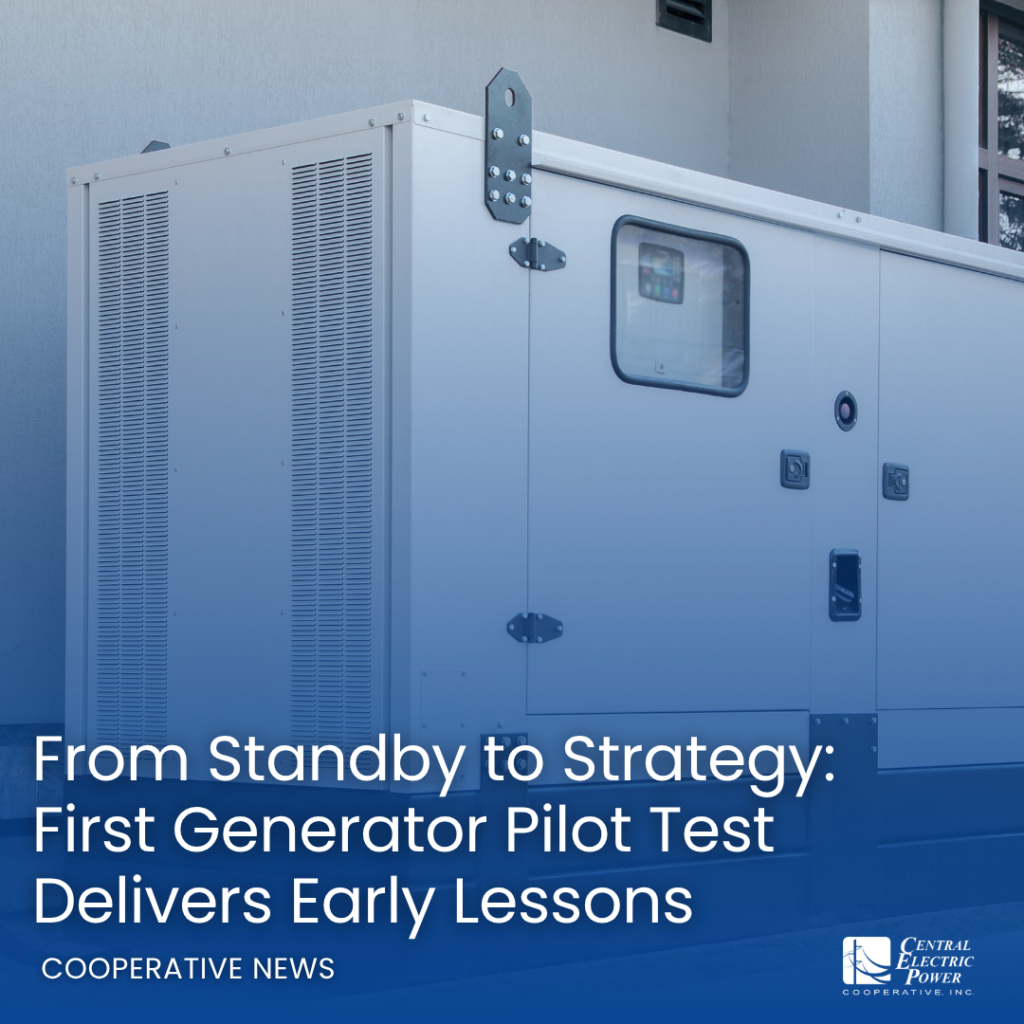
Backup generators are a familiar part of commercial and industrial (C&I) operations. Central is exploring how generators already installed at C&I facilities could serve as flexible reliability resources during times when the electric system is under strain.
The pilot is not focused on routine economic dispatch or peak shaving. Instead, it evaluates how these existing resources could support reliability before an outage or more significant system action becomes necessary.
Daniel Eubanks, vice president of engineering at Edisto Electric Cooperative, said the program could benefit cooperatives and their members.
“The generator pilot program is a great way for cooperatives to leverage existing generation resources to add supply during critical times when electric systems are under strain. This program has great potential to strengthen the electric system, reduce power supply costs during emergency situations, and allow co-op members to be a part of the solution.”
During the first test, participating generators received a unified start signal and came online within approximately one minute. Each generator successfully transferred load, although timing varied among locations because of differences in local transfer-switch settings.
The test included technicians at each site and Central and member cooperative personnel virtually monitoring the event. Their coordination helped the team evaluate how the generators responded and identify issues that may not have been visible without a live test.
Monitoring data provides valuable insight
The team reviewed live kilowatt, amperage and trend data during the event. This information helped confirm generator output, evaluate communications and compare reported readings with expected performance.
The test also identified data-quality issues that require follow-up. Some readings were incomplete or did not align with expected values, while other information required additional review related to sensors, system configuration, communications or alarm settings.
These findings will help Central and its member cooperatives improve monitoring accuracy and consistency. The team also identified a need for more usable data exports and reporting tools to support future analysis and system integration.
Return-to-utility timing is another consideration
The generators started and transferred load as expected, but shutdown and return-to-utility timing varied among the participating sites.
Central and the participating cooperatives will review the return-to-utility timers, document the current settings and determine whether adjustments are needed. Consistent timing will be important as the pilot moves toward future dispatch events.
The first test also demonstrated the broader potential of using generation resources to support reliability.
Ryan Cooper, vice president and chief financial officer at Santee Electric Cooperative, said the pilot highlights the importance of collaboration across the cooperative system.
“As we face increasing challenges with grid capacity, it makes sense to look at the resources that already exist within our communities. This pilot is working to demonstrate how existing member-owned generators can become part of the reliability solution during critical periods. During the initial test event, the participating generators demonstrated that existing dispatchable distributed generation can provide meaningful support to the electric system during times of stress. While we’re still evaluating the results and determining the full potential, the pilot showed that assets already in place can help strengthen reliability when capacity is tight. The possibilities for scaling this concept across our cooperative systems could be tremendous if we continue to work together and engage participating members. This is the type of innovative, collaborative solution that will help us meet future energy challenges while maintaining reliable service for our members, but leveraging these resources will require cooperation across the entire organization, from Engineering and Operations ensuring system performance, to IT supporting communications and data integration, to Key Account Managers working with participating members, and Finance evaluating incentives and the program’s long-term value.”
Early lessons will guide the next phase
The first test moved the pilot from planning into real-world operation. It also provided several lessons that will guide future program development:
- Newly installed systems should be fully commissioned before they are enrolled in the pilot. Commissioning should verify communications, wiring, transfer-switch operation and generator performance.
- Regular test events can help confirm that participating systems remain operational and ready to respond.
- Connectivity and communications should be monitored on an ongoing basis so issues can be addressed before an event occurs.
- A consolidated monitoring page showing generator status, voltage, real-time power output and combined output would provide a clearer picture of system performance.
- Communication procedures should address advance notification for participating businesses, event opt-outs, operating limitations, current contact information and notification of cooperative personnel before each event.
- Maintaining both a primary and backup contact for each participating business will help ensure that someone is available when an event is scheduled.
- Potential support for sensitive equipment and critical IT systems could help address business concerns and reduce barriers to participation.
The first test confirmed that participating C&I generators can respond to a coordinated start signal and provide measurable output. It also identified technical, monitoring and communication details that must be addressed as the pilot continues.
Those findings are the purpose of a pilot. Each test gives Central and its member cooperatives a clearer understanding of how existing generators could become a reliable resource for the broader electric system.
This first test builds on Central’s earlier work exploring how commercial backup generators can support grid reliability. To learn more about the pilot’s original concept and purpose, read “From Standby to Strategy: Central Electric Repositions Commercial Generators.”